

The U.S. housing market is in spooky season: 15% of home sellers are getting ghosted by buyers
Sarah Davis
Halloween is just about a week away, but spooky season started early for the U.S. housing market. Recommended VideoIn September, more than 53,000 home-purchase agreements were canceled—or 15% of all homes under contract, according to Redfin data released Wednesday. That’s nearly a 14% jump from the same time last year. The housing markets with the highest percentage of pending sales that fell out of contract include: Minneapolis (11%)Boston (10%)New York City (9.6%)Seattle (9.5%)Montgomery County, Pa. (9.2%)Buyers are ghosting sellers because—considering high home prices and mortgage rates—they expect homes to be near-perfect to follow through on a contract, according to Redfin. Plus, Jo Chavez, a Redfin Premier agent in Kansas City, Mo., said in a statement he’s seeing “a lot of buyer’s remorse.”“Buyers make an offer, then they start worrying they could have found a better deal or a better home because there are more home sellers than buyers in the market,” Chavez said. “Some other buyers are backing out because they’re concerned about job security.”Americans are so worried about the economy, in fact, a recent Fannie Mae survey showed a whopping 73% of them said it’s a bad time to buy a house. Meanwhile, only 32% of consumers said they expect their personal finances to improve during the next year, and 23% said they think things will get worse. But aside from overall economic anxiety, buyers and sellers are failing to agree on concessions and repairs, according to Redfin. That’s a major shift from the pandemic-era housing market in which many buyers chose to forgo concessions and repairs in hopes of presenting a more favorable offer in a highly competitive housing market. That dynamic has flipped though, with the housing market showing signs its turning in favor of buyers. “For prospective buyers who have been waiting on the sidelines, the housing market is finally starting to listen,” wrote chief economist Mark Fleming in an Aug. 29 First American post. That’s due to home price growth that is mostly flat or slightly declining because of decreasing demand and increasing supply, according to the National Association of Home Builders. Redfin also says it’s a buyer’s market in most of the U.S.—and that’s why so many transaction cancellations are happening. “Those who are still in the market know they have leverage,” according to Redfin. “It’s common to be choosier and ask for repairs, price reductions and other concessions. When sellers push back, or when inspections reveal new issues, many buyers are walking away.” Climate risks in the Sunbelt region have also discouraged some buyers from following through on contracts, according to Redfin. Some sellers are delisting homesWhile many buyers are pulling out of home purchase agreements, some sellers are also pulling their homes off the market. “It’s a clear signal that buyers are holding more of the power right now, especially with inventory climbing and [mortgage] rates staying elevated,” Anthony Djon, founder of Anthony Djon Luxury Real Estate in Detroit, previously toldFortune. That’s because they’re not getting the offers they think they deserve for their homes, and average time on the market is increasing. A recent Realtor.com report shows the typical home has spent 62 days on the market, a week longer than the same time last year. “What we’re seeing nationally is a market that’s gradually rebalancing, with buyers gaining leverage and sellers facing a tradeoff: Adjust to the market and sell for less, or hold out and risk sitting indefinitely,” Realtor.com Senior Economist Jake Krimmel previously toldFortune. “Many sellers still aren’t pricing to sell.”Redfin suggests that to keep home purchase agreements in place, sellers should get a pre-inspection, be realistic and flexible with concessions and repairs, and price the home appropriately. Even though buyers are “in the driver’s seat in much of the U.S.,” according to Redfin, they should still plan to get pre-approved, research insurance costs and HOA fees, and back out only if there are major issues or repairs needed that are unreasonable.Join us at the Fortune Workplace Innovation SummitMay 19–20, 2026, in Atlanta. The next era of workplace innovation is here—and the old playbook is being rewritten. At this exclusive, high-energy event, the world’s most innovative leaders will convene to explore how AI, humanity, and strategy converge to redefine, again, the future of work. Register now.

Americans say $74,000 a year is the ‘perfect salary.’ But that would make buying a house affordable in only two states
Robert Johnson
A $74,000 salaryis above the national median and enough to comfortably cover rent in most U.S. cities, but it still falls short of affording a median-priced home in nearly every state. Monthly mortgage payments often exceed the one‑third income threshold, even for households earning nearly double that “ideal” salary. Experts say the bigger obstacle isn’t just today’s mortgage rates, but persistently high home prices fueled by tight inventory and homeowners holding on to their low-rate mortgages.All things considered, $74,000 per year doesn’t sound like a bad salary. It’s about $12,000 more than the average salary in the U.S. and enough to afford $1,800 in rent in most major U.S. cities.Recommended VideoAmericans consider that amount of money to be the “perfect salary,” according to a recent survey of more than 2,000 U.S. adults by Talker Research. This is the average amount respondents said they would need in order to be happy, and half of respondents said the current amount of money they make isn’t enough to support their lifestyle, even beyond housing.While the average amount was $74,000, that’s not nearly enough to afford to buy a home in all but two U.S. states: West Virginia and Louisiana, according to Realtor.com—and even doubling that “perfect salary” to $148,000 won’t get you a house in every state.“Earning the ‘perfect salary’ may still fall short of affording a median-priced home in most states,” Hannah Jones, senior economic research analyst at Realtor.com, said in a statement.The median-priced new home in the U.S. costs more than $410,000, and an existing home will set you back more than $422,000, U.S. Census Bureau and National Association of Realtors data shows. And in states like California, Hawaii, Massachusetts, Colorado, and Washington, buyers can expect to shell out well over $600,000 to buy just a median-priced home.Assuming you purchase a home for $422,000, put down a conventional 20%, and your mortgage rate is about 6.5%, that means you’d end up spending nearly $2,500 on your monthly mortgage payment. That would be well over one-third of a monthly gross salary, which is generally discouraged. Most real estate experts warn against spending more than one-third of your salary on housing. But assuming a $148,000 salary, that $2,500 payment wouldn’t feel as overbearing—that is, if you have the ability to shell out on the down payment and can even find a home that meets your needs within that median price range. The biggest hurdles for U.S. homebuyersWhile much of the housing-market conversation has been focused on mortgage rates—which continue to hover in the mid-6% range—a sticky problem is home prices remain historically high. “It’s really the home prices that are the bigger hurdle,” Michelle Griffith, a luxury real-estate broker with Douglas Elliman in New York City, toldFortune. “Even if mortgage rates dropped to zero, the reality is that buying into the market … still requires a significant amount of cash upfront. Inventory is tight, and competition is high, so the cost of the property itself is what keeps most buyers on the sidelines.”Still, mortgage rates are a barrier for some buyers—especially those who recall the sub-3% mortgage rates of the pandemic era. It’s also the reason many current homeowners are staying in place and refusing to sell. “Many homeowners are reluctant [to] put their homes on the market and give up the low mortgage rates they already have,” according to Warren Buffett’s Berkshire Hathaway HomeServices. “To them, high price gains won’t mitigate their ability to pay more for another home at significantly higher interest rates.”Torsten Sløk, chief economist for Apollo Global Management, wrote in a Thursday note that housing supply is holding steady because current homeowners don’t want to sell and take on higher mortgage rates. Meanwhile, demand is slowing because home prices and mortgage rates remain relatively high. That could be somewhat good news about home prices.“The bottom line is that there is downward pressure on home prices coming from falling demand and rising supply,” Sløk wrote.While not by much, mortgage rates are also trending slightly lower during the past few months, and home-price growth is mostly flat or slightly declining. Improving housing affordability “will take time, likely years, [but] the balance of power is no longer as one-sided as it was during the pandemic frenzy,” wrote Mark Fleming, chief economist for financial services firm First American. “For those prospective buyers who have been waiting on the sidelines, the housing market is finally starting to listen.”Join us at the Fortune Workplace Innovation SummitMay 19–20, 2026, in Atlanta. The next era of workplace innovation is here—and the old playbook is being rewritten. At this exclusive, high-energy event, the world’s most innovative leaders will convene to explore how AI, humanity, and strategy converge to redefine, again, the future of work. Register now.

Dow jumps 413 points in 5 minutes as Trump reassures markets ‘it will all be fine’
Jennifer Brown
And back up goes Wall Street. U.S. stocks are rallying Monday after President Donald Trump said “it will all be fine,” just days after he sent the market reeling by threatening much higher tariffs on China.Recommended VideoThe S&P 500 jumped 1.1% to recover a little less than half of its drop from Friday, which was its worst since April. The Dow Jones Industrial Average was up 413 points, or 0.9%, as of 9:35 a.m. Eastern time, and the Nasdaq composite was 1.3% higher.“Don’t worry about China,” Trump said on his social media platform Sunday. He also said that China’s leader, Xi Jinping, “doesn’t want Depression for his country, and neither do I. The U.S.A. wants to help China, not hurt it!!!”It was a sharp turnaround from the anger Trump displayed on Friday, when he accused China of “ a moral disgrace in dealing with other Nations.” He pointed to “an extremely hostile letter” describing curbs to exports of rare earths, which are materials used in the manufacturing of everything from personal electronics to jet engines. Trump said at the time that he may place an additional 100% tax on imports from China starting on Nov. 1.Trump’s backtrack in anger raised hopes that the world’s two largest economies may find a working relationship that allows global trade to continue.The market’s big moves the last two days echo its manic swings in April, when Trump shocked investors with his “Liberation Day” announcement of worldwide tariffs, only to eventually relent on many to give time to negotiate trade deals with other countries.If this time ends up similarly, with trade tensions and uncertainty subsiding, potentially even after a sharp drop for stock prices, conditions could allow for a rolling recovery to continue into 2026, according to Morgan Stanley strategists led by Michael Wilson.To be sure, the U.S. stock market may have been primed for a drop and was just looking for a potential trigger.It was already facing criticism that prices had shot too high following the S&P 500’s nearly relentless 35% run from a low in April. The index, which dictates the movements for many 401(k) accounts, is still near its all-time high set last week.Not only did Trump’s backdown from tariffs in April help launch stock prices, so did expectations for several cuts to interest rates by the Federal Reserve to help the economy.Critics say the market looks too expensive now after prices rose much faster than corporate profits. Worries are particularly high about companies in the artificial-intelligence industry, where pessimists see echoes of the 2000 dot-com bubble that imploded. For stocks to look less expensive, either their prices need to fall, or companies’ profits need to rise.That’s raising the stakes in the upcoming earnings reporting season for U.S. companies, which are set to say how much profit they made during the summer. JPMorgan Chase, Johnson & Johnson and United Airlines are some of the big names on the calendar for this week.Fastenal tumbled 4.5% for one of the biggest losses in the S&P 500 after reporting profit for the latest quarter that was slightly weaker than analysts expected.In stock markets abroad, indexes were mixed in Europe following sharp losses in Asia.Stocks fell 1.5% in Hong Kong and 0.2% in Shanghai. China reported its global exports rose 8.3% in September from a year earlier, the strongest growth in six months and further evidence that its manufacturers are shifting sales from the U.S. to other markets.___AP Business Writers Matt Ott and Elaine Kurtenbach contributed.Join us at the Fortune Workplace Innovation SummitMay 19–20, 2026, in Atlanta. The next era of workplace innovation is here—and the old playbook is being rewritten. At this exclusive, high-energy event, the world’s most innovative leaders will convene to explore how AI, humanity, and strategy converge to redefine, again, the future of work. Register now.

Cape Cod is considering taxing luxury home sales of $2+ million to raise funds for the housing market’s ‘missing middle’
Sarah Jones
Cape Cod, one of the priciest housing markets in the U.S., is considering a 2% real-estate transfer fee on luxury homes above $2 million to fund affordable housing. Similar “mansion taxes” in Los Angeles and Rhode Island show how other expensive markets are turning to surcharges on wealthy homeowners to redistribute housing wealth.Cape Cod is one of the most expensive housing markets in the U.S. While the median home price in the beachy region of Massachusetts is about $600,000, waterfront properties and homes in exclusive areas often exceed $1 million, according to Warren Buffett’s Berkshire Hathaway Home Services.Recommended VideoAnd luxury homes in the region might get even more costly as Cape Cod lawmakers consider a tax on wealthy homeowners. The proposal, currently before the Barnstable County Assembly of Delegates, would tack on an extra 2% surcharge on luxury-home sales above $2 million.The goal of the proposed real-estate transfer fee is to generate up to $56 million per year for affordable and year-round housing to make Cape Cod a place where “working families, seniors, and young people can afford to live,” according to the Falmouth Democratic Town Committee.Since housing is so expensive on the Cape, the majority of homeowners there include affluent second-home buyers, pre-retirement couples, high-paid remote and hybrid workers, and investors, according to Massachusetts-based real-estate firm Guthrie Shofield Group. “We’ve always been a place where the wealthy or affluent come to vacation and when they come to vacation, it’s typically service-based employees and that workforce waiting on them,” Alisa Magnotta, CEO of Hyannis, Mass.-based Housing Assistance, said in a statement.Indeed, homeowners for a majority of the towns on Cape Cod need to make about $200,000 to $300,000 or more per year to afford to buy a home there, according to Housing Assistance. Meanwhile, Cape Cod workers’ wages are much lower when compared to the rest of the state: While the median household income in Massachusetts is about $101,000, according to Housing Assistance, the median income in many Cape towns is just about $70,000 to $80,000.“A transfer fee is not a tax on regular people—it’s a way to reallocate some of the wealth from second or third home buyers to support the people who make this community what it is,” Ella Sampou, a community organizer with the Lower Cape Community Development Partnership, said in a statement.Therefore, the property exchange fee could help build for the “missing middle,” or a range of housing options like duplexes, townhomes, or apartment complexes that are often more affordable than single-family homes for the average wage earner.Other expensive cities with extra real-estate taxesCape Cod isn’t the first expensive housing market to introduce an extra real-estate tax on the wealthy. Similarly, the so-called “mansion tax” in Los Angeles tacks on an additional 4% tax to property sales of at least $5 million and a 5.5% tax for $10 million-plus properties. The cost of the tax is typically paid by the seller, and is something separate from a home’s sales price, but can be a “massive amount of money,”Selling Sunsetstar and Oppenheim Group agent Emma Hernan previously toldFortune. On the flipside of the argument about a real-estate tax on luxury properties, Hernan also described it as a “nightmare” for both sellers and agents. In LA, for example, someone selling a $5 million home would have to pay an extra $200,000 they “didn’t really factor in when they bought the home because the mansion tax wasn’t in play,” Hernan said.There’s also a mansion tax in Rhode Island targeting luxury second homes and non-owner-occupied properties. It’s commonly referred to as the “Taylor Swift Tax” since the pop star owns a $17 million mansion there. Beginning next year, Rhode Island will slap a surcharge on vacation homes in the state that are worth at least $1 million. Mansion owners will have to pay $2.50 for every $500 of assessed value above the first million. For Swift, that would be an extra $136,000 in property taxes. (A Cape Cod home previously owned by Swift just recently went up for sale for $14.5 million). Join us at the Fortune Workplace Innovation SummitMay 19–20, 2026, in Atlanta. The next era of workplace innovation is here—and the old playbook is being rewritten. At this exclusive, high-energy event, the world’s most innovative leaders will convene to explore how AI, humanity, and strategy converge to redefine, again, the future of work. Register now.
The U.S. housing market is in spooky season: 15% of home sellers are getting ghosted by buyers
Sarah Davis
Americans say $74,000 a year is the ‘perfect salary.’ But that would make buying a house affordable in only two states
Robert Johnson
Dow jumps 413 points in 5 minutes as Trump reassures markets ‘it will all be fine’
Jennifer Brown
Cape Cod is considering taxing luxury home sales of $2+ million to raise funds for the housing market’s ‘missing middle’
Sarah Jones

Husband-Wife Team Bring Affordable Housing to D.C. Veterans
David Brown

Oracle founder Larry Ellison has pledged to give away 95% of his $393B fortune—but sudden leadership changes fuel a mystery
John Williams

Markets look unstoppable, but JPMorgan CEO Jamie Dimon sees a 30% chance of a correction: ‘I’m far more worried than others’
David Brown

Trump calls his 50-year mortgage idea ‘not even a big deal’ while insisting ‘the economy is the strongest it’s ever been’
Jane Williams

Jerome Powell just rattled markets by calling stocks ‘highly valued.’ BofA finds 19 of 20 key metrics in the S&P 500 are ‘statistically expensive’
Jane Williams

Bank of England on AI mania: ‘Stretched’ stock valuations ‘comparable to the peak of the dotcom bubble’
Sarah Johnson

Back in the ’90s a Fed chief warned about ‘irrational exuberance’ in the markets. Stocks rose 105% over the next 4 years
Jennifer Jones
Gen Zers are no doubt baffled by such recent headlines as “Fed Chair Powell just had his ‘irrational exuberance’ moment, Ed Yardeni says,” and “Did Jerome Powell Just Say ‘Irrational Exuberance’?” Those headlines refer to a long-ago event involving a previous Fed chair, dizzyingly high stock prices, and an eventual market crash. But beware: Some market soothsayers misinterpret that earlier episode, and getting it wrong could misguide today’s investors.Recommended VideoThe headlines were sparked by a Powell appearance where he was asked, after his speech, if today’s record-high stock prices affect Fed policy. He answered, “We do monitor that, but we’re not targeting any level of prices for particular financial assets. We don’t have a view that we know what the right price of any particular financial asset is.” It was classic circumspect Fed talk. Then he added, “We do look at overall financial conditions,” and he went further to note, “For example, equity prices are fairly highly valued.” Within minutes, the words “highly valued” were pinging through the financial world. The words’ importance was a bit fuzzy. Maybe the Fed would somehow engineer the markets downward, or, with its vast data, it might foresee a market decline.Old-timers immediately saw the incident’s parallel with a speech Fed Chair Alan Greenspan gave in the 1990s. He mentioned the phrase “irrational exuberance”—in an abstract, what-if way—as a force that might push stock prices too high. No one heard it that way, however. His real message seemed clear: The most influential person in the world’s largest economy thought stock prices were too high.Today that speech is widely seen as the setup for the historic market collapse of 2000 in which many hot new internet companies succumbed. Those recent headline writers are asking: Could Powell’s remark play the same role in a roaring market fueled by AI?But that’s not the right question. Greenspan gave his speech in December 1996—almost four years before the market plunge. As he toldFortuneyears later, “If you had left the market when I gave my irrational exuberance speech, you would have missed another 80% of increase” in stock values. (Actually, it was closer to 100%.) As for Powell’s talk last Tuesday—despite the to-do, the S&P 500 has barely moved.The lesson isn’t that investors tremble when Fed chairs talk about stocks. It’s that investor behavior is a compendium of many forces, and the Fed chief’s views don’t propel markets one way or another. That doesn’t mean Powell is wrong. His simple statement that stocks are highly valued is indisputable. Most measures are screaming that the S&P is insanely overpriced. The Shiller Cyclically Adjusted Price/Earnings ratio is the highest it has been since the dotcom peak. The price-to-sales ratio hit a new all-time high this week. The Buffett Indicator—ratio of the market’s capitalization to GDP—says stocks are highly overvalued, and Warren Buffett is holding an enormous cash cache because he can’t find bargains.The truth is, nobody knows if the next crash is coming or when. Not even Fed chairs.Join us at the Fortune Workplace Innovation SummitMay 19–20, 2026, in Atlanta. The next era of workplace innovation is here—and the old playbook is being rewritten. At this exclusive, high-energy event, the world’s most innovative leaders will convene to explore how AI, humanity, and strategy converge to redefine, again, the future of work. Register now.

Bilingual AI boosts Hispanic homeownership even as federal housing agencies moves to English-only services
Michael Jones
For many Hispanics the road to homeownership is filled with obstacles, including loan officers who don’t speak Spanish or aren’t familiar with buyers who may not fit the boxes of a traditional mortgage applicant.Recommended VideoSome mortgage experts are turning to artificial intelligence to bridge the gap. They want AI to help loan officers find the best lender for a potential homeowner’s specific situation, while explaining the process clearly and navigating residency, visa or income requirements.This new use of a bilingual AI has the potential to better serve homebuyers in Hispanic and other underrepresented communities. And it’s launching as federal housing agencies have begun to switch to English-only services, part of President Donald Trump’s push to make it the official language of the United States. His executive order in August called the change a way to “reinforce shared national values, and create a more cohesive and efficient society.”The number of limited-English households tripled over the past four decades, according to the Urban Institute, a nonprofit research organization based in Washington, D.C. The institute says these households struggle to navigate the mortgage process, making it difficult for them to own a home, which is a key factor in building generational wealth.Bilingual AI helps demystify home loansThe nonprofit Hispanic Organization of Mortgage Experts launched an AI platform built on ChatGPT last week, which lets loan officers and mortgage professionals quickly search the requirements of more than 150 lenders, instead of having to contact them individually.The system, called Wholesale Search, uses an internal database that gives customized options for each buyer. HOME also offers a training program for loan officers called Home Certified with self-paced classes on topics like income and credit analysis, compliance rules and intercultural communication.Cubie Hernandez, the organization’s chief technology and learning officer, said the goal is to help families have confidence during the mortgage process while pushing the industry to modernize. “Education is the gateway to opportunity,” he said.HOME founder Rogelio Goertzen said the platform is designed to handle complicated cases like borrowers without a Social Security number, having little to no credit history, or being in the U.S. on a visa.Faster applications for buyersLoan officer Danny Velazquez of GFL Capital said the platform has changed his work. Before, he had to contact 70 lenders one by one, wait for answers and sometimes learn later that they wouldn’t accept the buyer’s situation.The AI tool lets him see requirements in one place, narrow the list and streamline the application. “I am just able to make the process faster and get them the house,” Velazquez said.A homebuyer’s experienceOne of Velazquez’s recent clients was Heriberto Blanco-Joya, 38, who bought his first home this year in Las Vegas. Spanish is Blanco-Joya’s first language, so he and his wife expected the process to be confusing.Velazquez told him exactly what paperwork he needed, explained whether his credit score was enough to buy a home, and answered questions quickly.“He provided me all the information I needed to buy,” Blanco-Joya said. “The process was pleasant and simple.”From their first meeting to closing day took about six weeks.Safeguards for accuracyMortgage experts and the platform’s creators acknowledge that artificial intelligence creates new risks. Families rely on accurate answers about loans, immigration status and credit requirements. If AI gives wrong information, the consequences could be serious.Goertzen, the CEO of HOME, said his organization works to reduce errors by having the AI pull information directly from lenders and loan officers. The platform’s database is updated whenever new loan products appear, and users can flag any problems to the developers.“When there are things that are incorrect, we are constantly correcting it,” Goertzen said. “AI is a great tool, but it doesn’t replace that human element of professionalism, and that is why we are constantly tweaking and making sure it is correct.”Loan officers welcome AI supportJay Rodriguez, a mortgage broker at Arbor Financial Group, said figuring out the nuances of different investors’ requirements can mean the difference between turning a family away and getting them approved.Rodriguez said HOME’s AI platform is especially helpful for training new loan officers and for coaching teams on how to better serve their communities.Another company is testing similar AI toolsBetter Home & Finance Holding Company, an AI-powered mortgage lender, has created an AI platform called Tinman. It helps loan officers find lenders for borrowers who have non-traditional income or documents, which is common among small business owners.They also built a voice-based assistant called Betsy that manages more than 127,000 borrower interactions each month. A Spanish-language version is in development.“Financial literacy can be challenging for Hispanic borrowers or borrowers in other underserved populations,” said Leah Price, vice president of Tinman platform. “Tools like Betsy can interact and engage with customers in a way that feels supportive and not judgmental.”Join us at the Fortune Workplace Innovation SummitMay 19–20, 2026, in Atlanta. The next era of workplace innovation is here—and the old playbook is being rewritten. At this exclusive, high-energy event, the world’s most innovative leaders will convene to explore how AI, humanity, and strategy converge to redefine, again, the future of work. Register now.
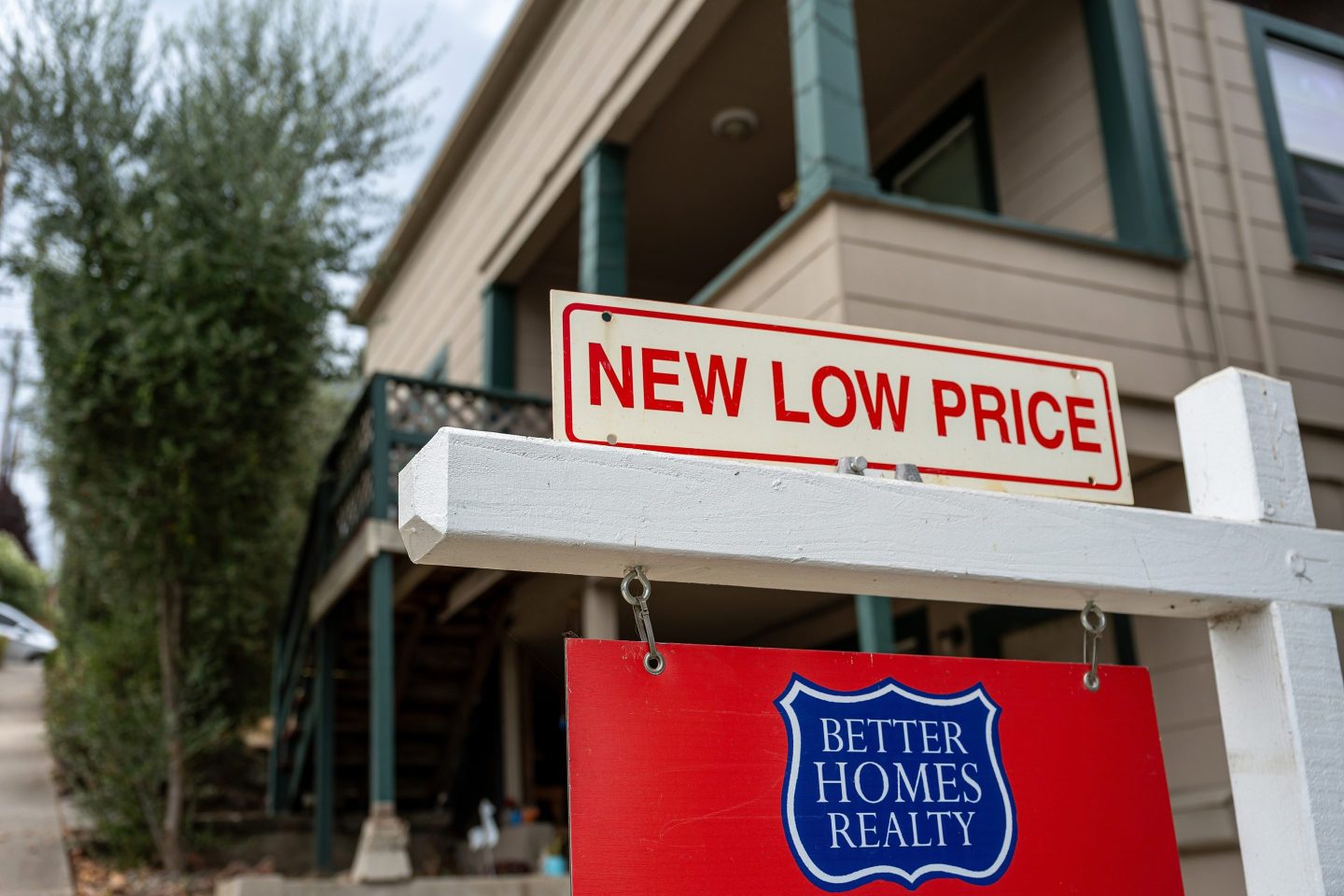
Black Friday deals aren’t just for holiday shopping. Homebuyers are getting record-high discounts as desperate sellers offer multiple price cuts
John Miller
After the spring selling season flopped, the housing market is finally heating up in the colder autumn months as sellers slash prices more aggressively.Recommended VideoWhile the typical individual discount remains $10,000, sellers are increasingly offering multiple reductions as tepid demand leaves homes on the market for longer, according to Zillow. As a result, the cumulative price cut in October hit $25,000, matching the largest discounts Zillow has ever recorded.The data comes just in time for Black Friday. But instead of looking for holiday-shopping deals on toys, sweaters, and electronics, consumers in some cities could get 9% off a home’s typical value.“Most homeowners have seen their home values soar over the past several years, which gives them the flexibility for a price cut or two while still walking away with a profit,” Zillow Senior Economist Kara Ng said in a statement released on Monday. “These discounts are bringing more listings in line with buyers’ budgets, and helping fuel the most active fall housing market in three years. Patient buyers are reaping the rewards as the market continues to rebalance.”The most expensive housing markets have the largest median discounts by dollar value: San Jose ($70,900), Los Angeles ($61,000), San Francisco ($59,001), New York ($50,000) and San Diego ($50,000).But when looking at discounts as a share of a home’s value, cities in other regions actually have better deals. For example, the typical markdown in Pittsburgh is $20,000—a fraction of the discount in the bigger markets—but it represents 9% of that metro area’s home value, according to Zillow.New Orleans also boasts a 9% discount, while Austin’s is 8.4%, Houston’s is 8.2%, and San Antonio’s is 7.9%.ZillowDesperate sellers, buyer’s marketThe steeper discounting comes as the housing market has been frozen for much of the past three years after rate hikes from the Federal Reserve in 2022 and 2023 sent borrowing costs higher, discouraging homeowners from giving up their existing ultra-low mortgage rates.But the dearth of new supply kept home prices high, shutting out many would-be homebuyers who were also balking at elevated mortgage rates.With demand weak, the housing market has been shifting away from sellers and toward buyers. The pendulum has swung so far the other way that delistings soared this year as sellers became fed up with offers coming in below asking prices and took their homes off the market.By one measure, this is the strongest buyer’s market on record. In October, sellers outnumbered buyers by 36.8%, the largest such gap in Redfin data going back to 2013. The mismatch amounts to 528,769 people.The number of buyers fell 1.7% to the second-lowest level ever because of high housing costs and economic uncertainty, Redfin said last week. The tepid demand sent the number of sellers down 0.5%, marking the fifth straight decline and hitting the lowest level since February.Matt Purdy, a Redfin Premier real estate agent in the Denver area, said some homeowners need to sell due to a new job or a divorce. While sellers want top dollar, buyers are focused on getting a low monthly payment, and there’s a shortage of house hunters.“Oftentimes the buyer ends up winning the negotiation because they have options—there are a lot of sellers who are desperate to make a deal happen,” he said in a statement last week.

Stocks rise towards more records, helped by Elon Musk’s purchase of $1 billion worth of Tesla shares
David Davis
Wall Street is rising toward more records on Monday at the start of a week that could show whether the U.S. stock market’s big recent rally has been overdone or prescient.Recommended VideoThe S&P 500 rose 0.4% and was on track to top its latest all-time high, which was set last week. The Dow Jones Industrial Average was up 33 points, or 0.1%, as of 1:54 p.m. Eastern time, and the Nasdaq composite was adding 0.8% to its own record.Tesla helped lead the way and rose 5.3% after Elon Musk bought stock worth roughly $1 billion through a trust. The electric vehicle company’s stock price came into the day with a slight loss for the year so far, and the purchase could be a signal of Musk’s faith in it.That helped overshadow an early dip for Nvidia after China accused the chip company of violating its antimonopoly laws. Chinese regulators did not mention a punishment for Nvidia in a one-sentence statement on the matter but did say they would carry out “further investigation.” The stock was down more than 1% in early trading, but has since recovered to near break-even.The main event for the market will arrive on Wednesday. That’s when the Federal Reserve will announce its latest decision on interest rates, and the unanimous expectation is for its first cut of the year. Such a move could give a kickstart to the job market, which has been slowing.Stocks have already run to records on the assumption that a cut is coming on Wednesday, though. Expectations are also high that the Fed will keep lowering rates through the end of this year and into 2026. That creates the possibility for disappointment in the market, which would mean drops for stock prices, if the Fed doesn’t end up slashing rates as aggressively as traders expect.That’s why more attention will be on what Fed Chair Jerome Powell says in his press conference following the decision than on the decision itself. Fed officials will also release their latest projections for where they see interest rates and the economy heading in upcoming years, which could provide another potential flashpoint.What’s keeping the Fed on guard is a possible jump in inflation because of President Donald Trump’s tariffs. That’s because lower interest rates can give inflation more fuel and send it even higher. And inflation has so far proven difficult to get under the Fed’s 2% target.Another threat for Wall Street is if the job market slows too much. In that case, a resulting recession could create a downturn in corporate profits that’s big enough to swamp the benefits that lower interest rates bring in the near term.Trump, meanwhile, has been pushing angrily for more cuts to interest rates. He’s often attacked Powell personally, nicknaming him “Too Late,” and is pushing for the removal of one of the Fed’s governors from its board.“‘Too Late’ must cut interest rates now, and bigger than he had in mind,” Trump wrote on his social media network Monday, using his trademark all-caps style.On Wall Street, TKO Group climbed 2.5% after the owner of the UFC mixed-martial arts organization and other entertainment brands announced a plan for $1 billion in purchases of its stock. Such moves send cash directly to shareholders and can boost per-share results.Intel rose 3.4% after trimming its forecast for expenses this year. The move came after it completed the sale of a 51% stake in its Altera business to the Silver Lake investment firm.On the losing side of Wall Street was Hain Celestial, which fell 26.5% after reporting a larger loss for its latest quarter than it did a year earlier. Interim CEO Alison Lewis said the owner of “better-for-you” brands like Terra chips is making moves to stabilize sales “as we recognize our performance has not met expectations.”Alaska Air Group lost 5.8% after the airline said high fuel costs during the summer will likely cause its third-quarter results to come in at the low end of its forecasted range. It also cited higher expenses for overtime pay and for passengers’ compensation after bad weather and air-traffic control issues led to difficult operations, though it saw strong airfare trends thanks to demand for premium seats.In the bond market Treasury yields eased, continuing their downward run on expectations for cuts to rates by the Fed.The latest discouraging data on the economy came Monday from a report showing manufacturing activity in New York state is shrinking, contrary to economists’ expectations for continued growth. It’s the first month of contraction since June.The next big economic update will arrive Tuesday, when the U.S. government will say how much shoppers spent at U.S. retailers last month.The yield on the 10-year Treasury fell to 4.04% from 4.06% late Friday.In stock markets abroad, France’s CAC 40 climbed 0.9%, while indexes moved more modestly across the rest of Europe and Asia.AP Writers Yuri Kageyama, Matt Ott and Ken Moritsugu contributed.Join us at the Fortune Workplace Innovation SummitMay 19–20, 2026, in Atlanta. The next era of workplace innovation is here—and the old playbook is being rewritten. At this exclusive, high-energy event, the world’s most innovative leaders will convene to explore how AI, humanity, and strategy converge to redefine, again, the future of work. Register now.

Wall Street shrugs off shutdown threat as S&P 500 heads for fifth straight winning month
Sarah Davis

AI isn’t in a bubble—the cash (and the hype) are real, these analysts say
John Davis

Reaching New Champions to Build a Bigger Choir
Jane Smith

‘Very problematic’ disclosure of ‘confidential competitive’ data between Fannie Mae, Freddie Mac roils housing world
David Davis

Central banks will end up holding Bitcoin in their reserves even though it is ‘backed by nothing,’ Deutsche Bank predicts
David Brown

Paris Hilton took out a mortgage on the $63 million mansion she bought from Mark Wahlberg. Here’s why that’s actually a smart financial decision
Michael Davis
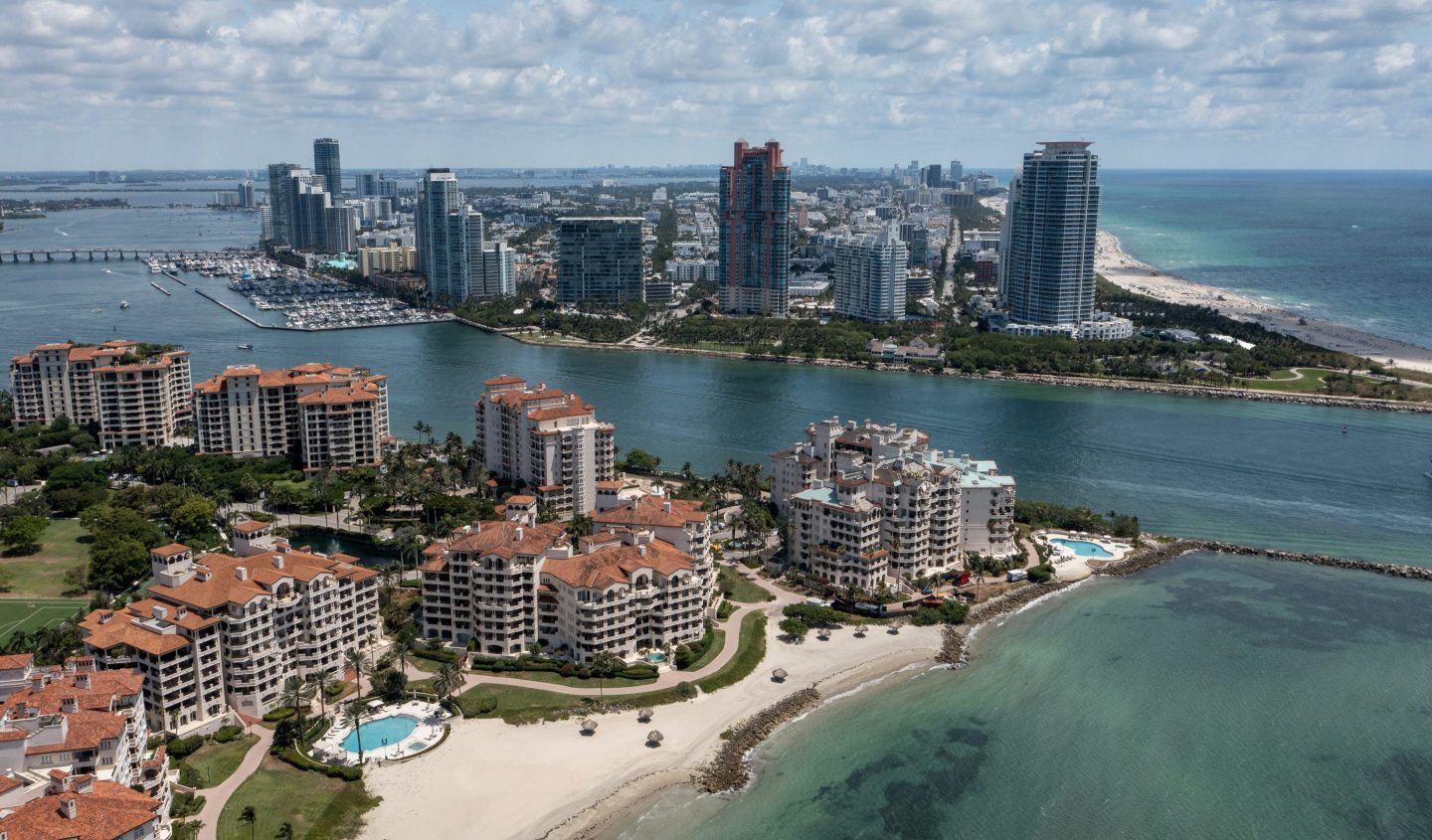
Condo feud erupts on Miami’s Fisher Island over $180 million lot
John Johnson

Aging in Place, at Home
Robert Jones

Disaster Recovery Reforms Advance in the Senate
Jennifer Jones

Zillow is the target of a massive infringement lawsuit that could force it to pay north of $1 billion in damages
Michael Brown
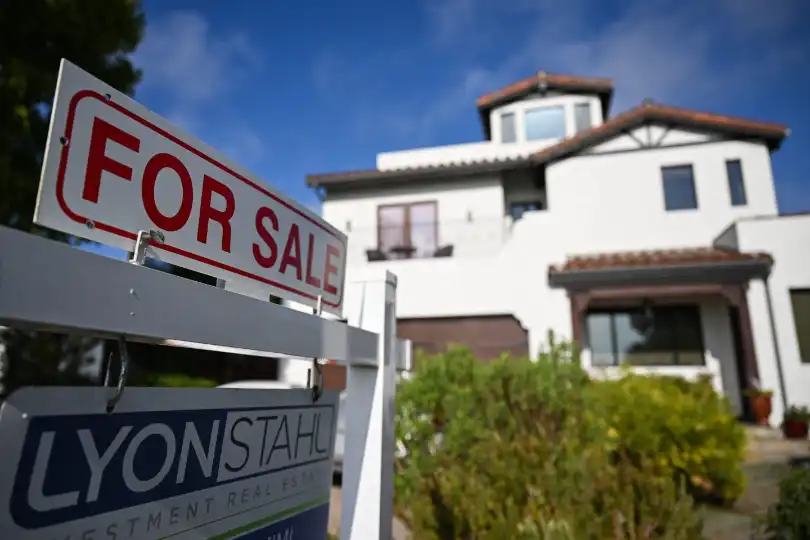
The housing market is no longer a wealth-building engine as home prices continue to slump
Michael Davis

In a frozen luxury housing market, buyers are asking to ‘try before you buy’ and having sleepovers in multimillion-dollar mansions
Emily Miller
Latest Articles

Not even a 0% mortgage rate would make buying a house affordable in these 6 U.S. cities
David Davis

Wall Street’s future hinges on a risky bet about what the American economy will do next
Robert Smith

Helping Eastern Kentucky Recover from Devastating Floods
John Miller

Trump-Vance Administration Releases Full President’s Budget Request for FY26
Jennifer Miller

The 10 hottest ZIP codes of 2025, according to Realtor.com
Jane Jones

Florida’s housing market was skewed wildly by the pandemic. It’s finally coming to grips with a ‘realistic middle ground’
Jane Smith

Mark Zuckerberg gifted noise-canceling headphones to his Palo Alto neighbors because of the nonstop construction around his 11 homes
Sarah Williams

Rescuing Ourselves: 20 Years After Hurricane Katrina
David Williams

Denver Regional TOD Fund Expands Affordable Homes in Littleton
Robert Johnson
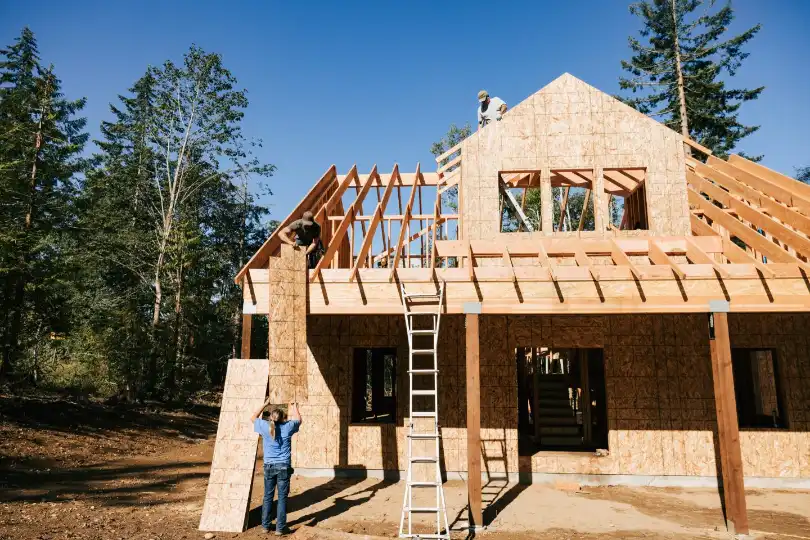
The price premium on new-construction homes is dissolving. New-home prices dropped in 30% of large U.S. cities last quarter
Emily Davis